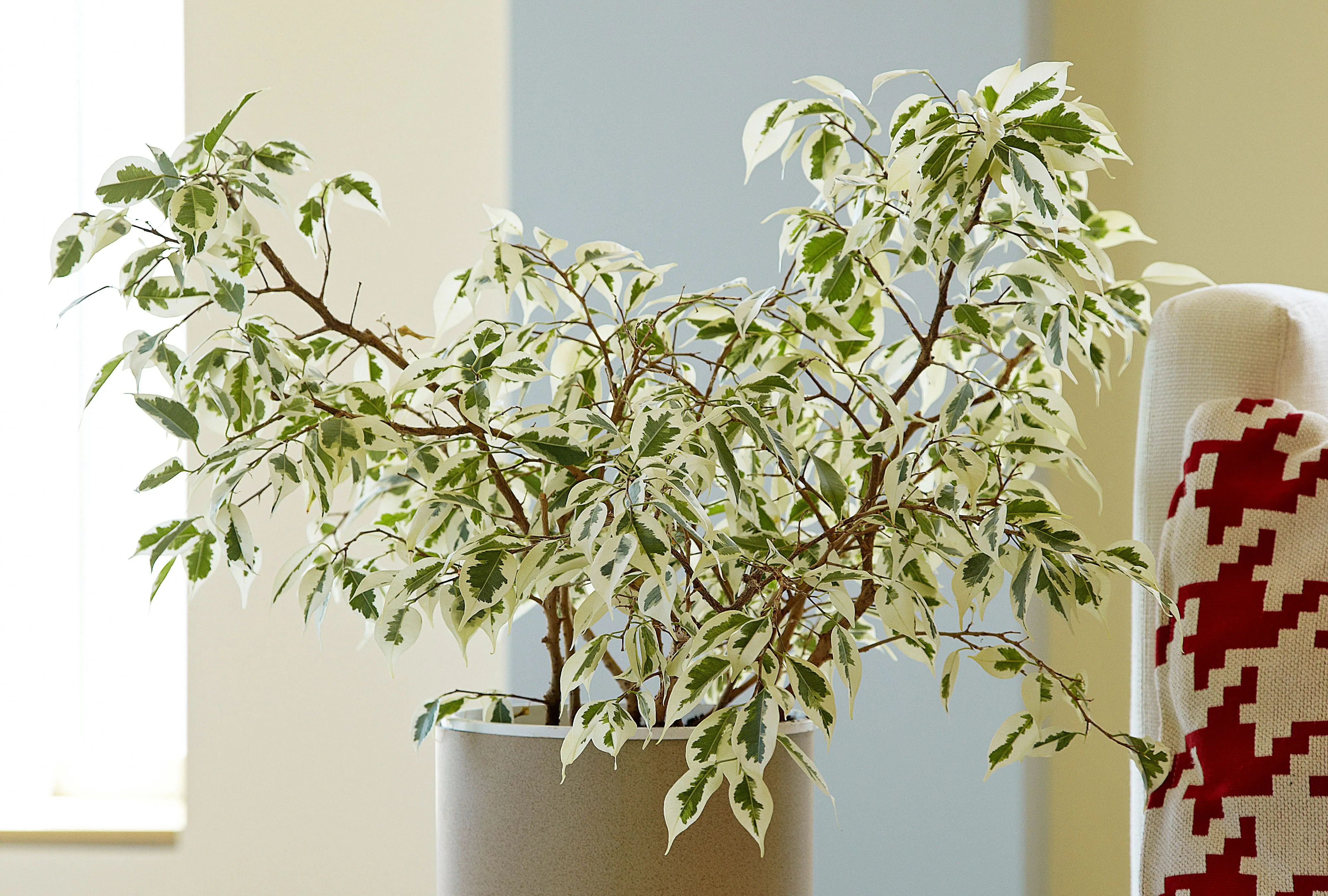
Sticky leaves on your ficus can be alarming—especially when they're accompanied by more leaf drop than usual. But by diagnosing the reason for sticky leaves early on and taking action, you can rescue your plant and bring it back to health. Here are the common causes and treatment plans for sticky ficus leaves.
Causes of Sticky Ficus Leaves
Environmental Stress
When the moisture and humidity levels in a ficus's environment change, it can start losing water from its leaves' tips—a process called guttation. The plant's natural sugars make this moisture sticky. If you've recently moved your ficus from outdoors to inside, or if the stickiness is accompanied by yellow leaves and a lack of new growth (signs of overwatering), guttation may be the reason for your plant's sticky leaves. Because the moisture releases from the leaves, it will often drip onto the floor too.
Almost all plants can undergo the kind of leaf "sweating" known as guttation if they're overwatered, but it's especially common on philodendrons, elephant ears and ZZ plants.
Common Pests
Sap-eating pests can also be the cause of sticky ficus leaves. Scale, mealybugs, and spider mites all create a sticky waste on leaves called honeydew. Here's what to look for to determine which insect may be causing the problems.
• Scale: The tiny, hard-shelled insects known as scale look likelittle gray or brown bumps. They can often be mistaken as part of the plant, but will come off if you scrape your fingernail across plant leaves.
• Mealybugs: If you see little white cottony masses on your ficus, you're likely dealing with mealybugs. These pests are related to scale, but have soft shells.
• Spider mites: So tiny that you can't usually see them, spider mites are best identified by the small webs they create on houseplants. Gritty-feeling leaves and branches, as well as yellowing, dusty-looking leaves, can be a sign of a spider mite problem too.
How to Treat Sticky Ficus Leaves
Once you've identified the culprit for your ficus's sticky leaves, you can start treatment to save it. Note that if pests are causing the problem, it's important to isolate your ficus to make sure the insects don't spread to other plants.
• Guttation: If you determine guttation is the cause of your ficus's sticky leaves, it's fairly easy to address. Scale back your watering (letting soil dry thoroughly before watering is a good rule of thumb). When you do water, make sure your plant is allowed to drain thoroughly.
•Scale or mealybugs: Prune away any leaves that are badly infested. Then purchase a houseplant insecticide at the garden center, and apply it according to the label. Organic horticultural oil sprays work better for scale, while soap sprays and neem oil sprays are better for mealybugs. You can also dab the insects individually with a Q-tip dipped in rubbing alcohol, but that can be an overwhelming task on large plants.
• Spider mites: If the problem is spider mites, take the ficus outside and wash it thoroughly (tops and bottoms of the leaves, all branches, and the trunk) with a strong blast from the garden hose. Spider mites are so tiny and vulnerable that a harsh blast of water will kill more than 90 percent of them.